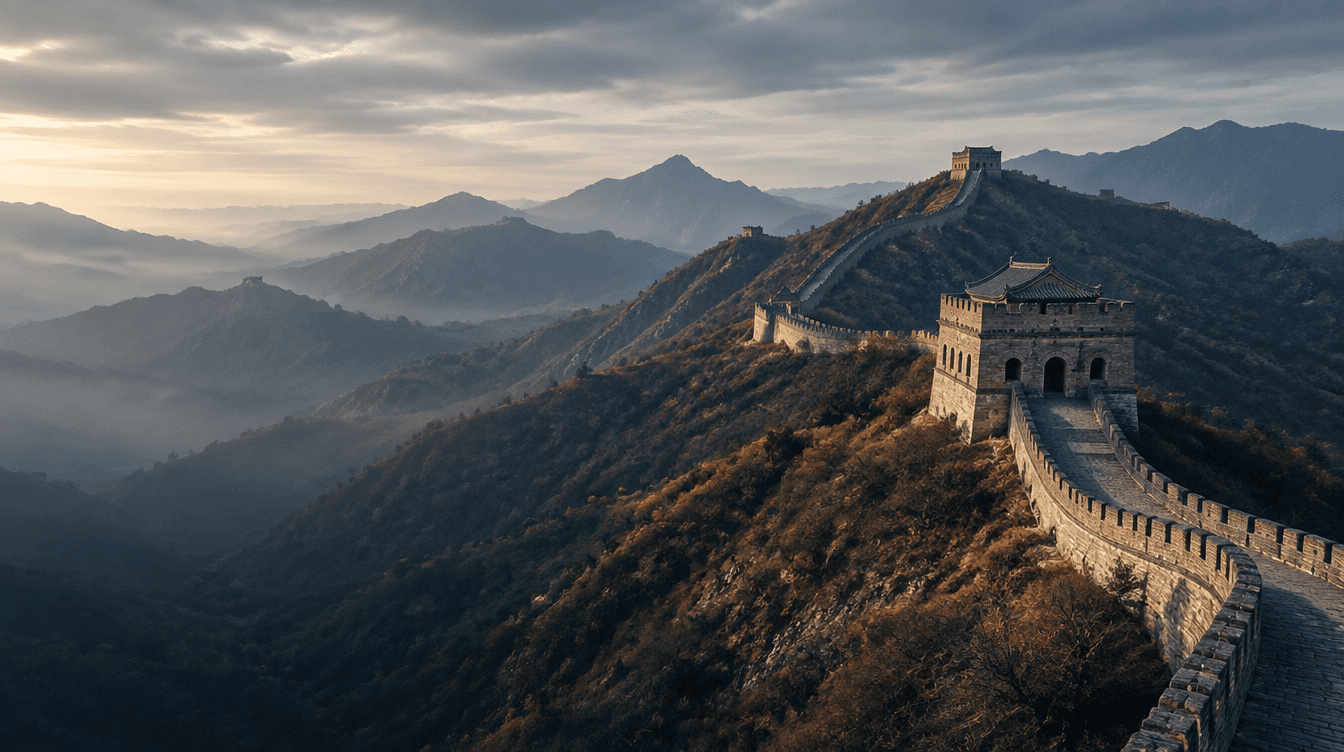
The world's second-largest economy, one step from your expansion
A quick overview of China for Brazilian companies planning to expand into this market — and how ORBE coordinates that move through its network of local partners.
We help Brazilian companies set up and operate in China, with one point of contact from strategy to the first day of operations.
If your company is evaluating an operation in China, we help you understand the market, choose the right structure and map out the requirements to operate locally — company formation, tax registration, local address and the documents each step requires.
We coordinate the process with a trusted network of local partners — accountants, lawyers and specialized providers — so your team doesn't have to manage each supplier on its own, in another language and under another legal system.
With 19 years supporting companies in Brazil, ORBE helps your company start in China lean, validate the market and scale its structure as the operation grows.
A quick overview of China
Capital
Beijing is the capital of China, seat of the central government and of the Communist Party of China.
Currency
The Yuan/Renminbi (RMB, code CNY) is the official currency, issued and regulated by the People's Bank of China, with significant foreign exchange controls on capital inflows and outflows.
Climate
Extremely varied given the size of the territory — from subarctic in the north to tropical in the south; Beijing has a continental climate, with hot, humid summers and cold, dry winters.
Context, culture and fun facts before you arrive
About China
China has more than 1.4 billion people and is the world's second-largest economy by nominal GDP.
It is organized as a single-party people's republic, divided into 23 provinces, 5 autonomous regions, 4 direct-administered municipalities and the Special Administrative Regions of Hong Kong and Macau.
Geography and regions
The territory is continental in scale, with a highly urbanized and industrialized east coast (Beijing, Shanghai, Guangdong) and an interior/west with mountainous, desert and less densely populated areas.
Culture and people of China
Mandarin is the predominant official language, although the country has hundreds of dialects and regional languages.
A millennia-old cultural tradition — rooted in Confucianism and Taoism — coexists with one of the most advanced technology and digital commerce environments in the world.
Fun facts
China is known as the "world's factory", home to some of the largest supply chains and industrial complexes on the planet.
It has been Brazil's largest trading partner for more than a decade, with a heavy weight in commodities such as soybeans, beef and iron ore.
National holidays
China observes fixed and movable holidays (tied to the lunar calendar), many of which result in nationwide shutdowns lasting several days.
| Holiday | Date | Type |
|---|---|---|
| New Year's Day | January 1 | Fixed |
| Spring Festival (Chinese New Year) | January or February (several days, varies) | Movable |
| Qingming Festival | April (varies) | Movable |
| Labor Day | May 1 | Fixed |
| Dragon Boat Festival | June (varies) | Movable |
| National Day / Golden Week | October 1 to 7 | Fixed |
| Mid-Autumn Festival | September or October (varies) | Movable |
Keep this calendar in mind — especially Chinese New Year and October's Golden Week — when planning business and administrative deadlines.
Tell us about your project
Fill in the details below so our team can understand your needs before the first conversation.