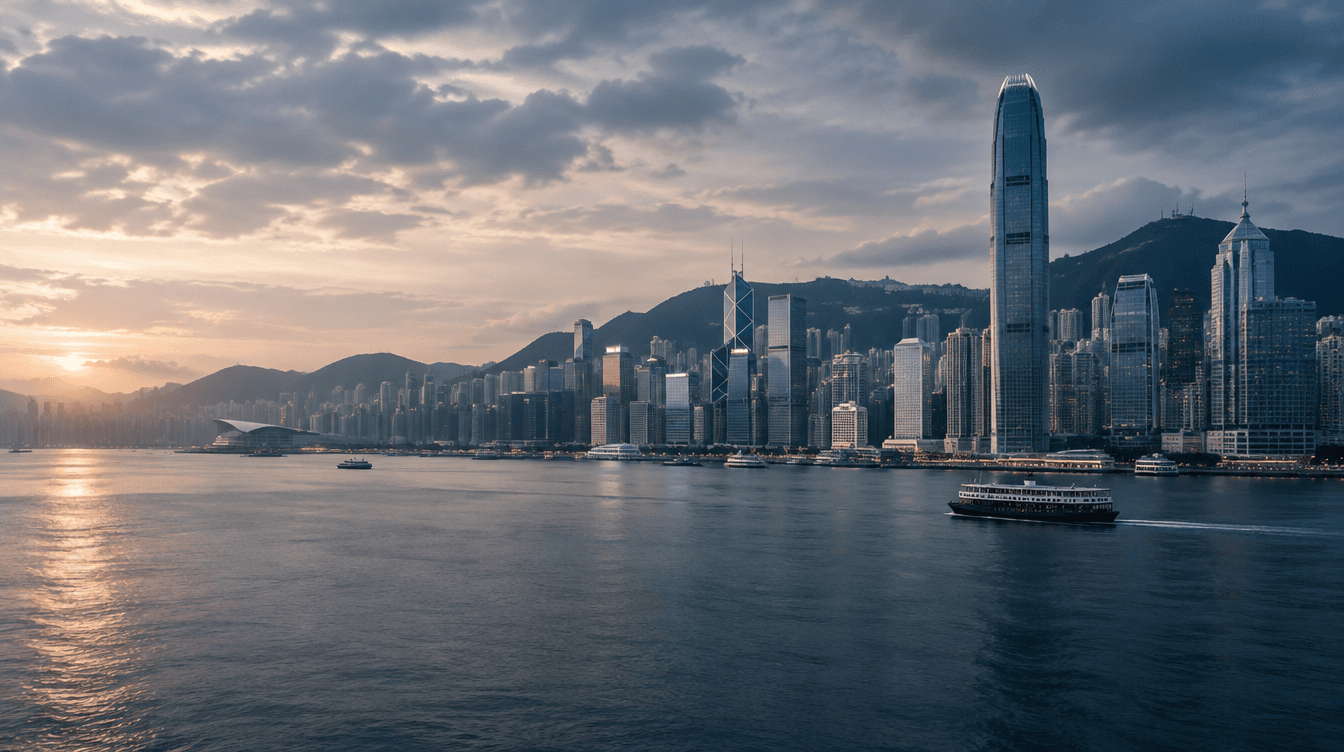
Your company's gateway to Asia starts in Hong Kong
A quick overview of Hong Kong for Brazilian companies planning to expand into this market — and how ORBE coordinates that move through its network of local partners.
We help Brazilian companies set up and operate in Hong Kong, with one point of contact from strategy to the first day of operations.
If your company is evaluating an operation in Hong Kong, we help you understand the market, choose the right structure and map out the requirements to operate locally — company formation, tax registration, local address and the documents each step requires.
We coordinate the process with a trusted network of local partners — accountants, lawyers and specialized providers — so your team doesn't have to manage each supplier on its own, in another language and under another legal system.
With 19 years supporting companies in Brazil, ORBE helps your company start in Hong Kong lean, validate the market and scale its structure as the operation grows.
A quick overview of Hong Kong
Status
Hong Kong is a Special Administrative Region (SAR) of China, with its own legal, customs and monetary systems under the "one country, two systems" principle.
Currency
The Hong Kong dollar (HKD) is the official currency, pegged to the US dollar and issued by authorized banks under the supervision of the Hong Kong Monetary Authority.
Climate
Humid subtropical, with long, hot and rainy summers — including typhoon risk — and short, mild winters.
Context, culture and fun facts before you arrive
About Hong Kong
Hong Kong is one of the world's leading financial centers, with around 7.5 million people concentrated in a small, densely populated territory.
English and Chinese (Cantonese) are the official languages, a legacy of the period when the territory was administered by the United Kingdom until its handover to China in 1997.
Since then, Hong Kong has operated under the "one country, two systems" principle, retaining its own common law legal system, currency and customs.
Geography and territory
The territory is divided into Hong Kong Island, the Kowloon peninsula, the New Territories and more than 200 smaller islands.
Mountainous terrain and little available flat land have led to one of the most vertical and dense urban developments in the world.
With no significant natural resources, the territory relies heavily on imports — including food and water.
Culture and people of Hong Kong
The culture blends Cantonese traditions with a strong British influence from the colonial period, visible in its architecture, language and legal system.
The business environment is bilingual and highly international, with English widely used in contracts and meetings.
Festivals such as Lunar New Year and the Mid-Autumn Festival remain central to social life and shape the business calendar.
Fun facts
It is consistently ranked among the territories with the most open economy and the simplest tax system in the world, with no VAT and no capital gains tax.
The public transit system (MTR) and vertical density make Hong Kong one of the most compact and efficient urban environments on the planet.
It has historically served as a gateway for companies looking to operate in mainland China and the rest of Asia.
Public holidays
Hong Kong observes fixed and movable statutory holidays (tied to the lunar calendar), valid throughout the territory.
| Holiday | Date | Type |
|---|---|---|
| New Year's Day | January 1 | Fixed |
| Lunar New Year | January or February (3 days, varies) | Movable |
| Ching Ming Festival | April (varies) | Movable |
| Labour Day | May 1 | Fixed |
| Buddha's Birthday | May (varies) | Movable |
| Dragon Boat Festival | June (varies) | Movable |
| HKSAR Establishment Day | July 1 | Fixed |
| Mid-Autumn Festival | September or October (varies) | Movable |
| National Day of China | October 1 | Fixed |
| Christmas and Boxing Day | December 25 and 26 | Fixed |
Keep them in mind when planning administrative deadlines, meetings and business operations with local partners.
Tell us about your project
Fill in the details below so our team can understand your needs before the first conversation.